Kerbal Space Program vs Space Engineers
See how two games stack up across what matters most to you.
Short answer
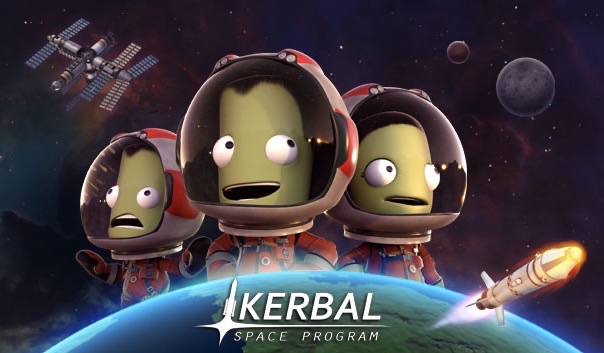
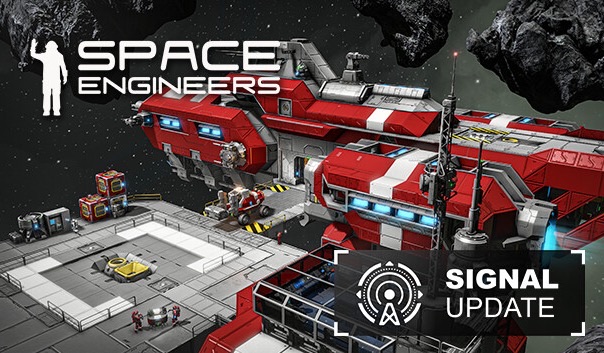
Kerbal Space Program is about the journey to orbit, with real orbital mechanics and a solar system to explore. Space Engineers is about what you build once you're there, with block-level ship engineering, multiplayer factions, and industrial automation. If you want to master spaceflight and mission design, choose KSP. If you want to engineer ships and build with friends, choose Space Engineers.
Side-by-side Comparison
Kerbal Space ProgramSpace Engineersimportance
The Syllabus vs. the Shipyard
These two games bracket the space sandbox from opposite ends. Kerbal Space Program is a curriculum in getting there: its rockets obey real orbital mechanics, and your failures teach you delta-v, transfer windows, and why your lander tipped over. Space Engineers is a shipyard for what happens after arrival: you assemble vessels from blocks, wire up conveyors, drill asteroids, and automate production.
The decisive tension is that one rewards you for designing a mission that works; the other rewards you for engineering a ship that functions in a simulated hard vacuum. KSP has no combat and is strictly single-player, with career and sandbox modes. Space Engineers offers faction servers, ship-to-ship engineering warfare, and persistent multiplayer worlds.
Where KSP gives you a whole solar system to explore, Space Engineers offers planets and deep space, but the draw is the construction itself. The difficulty in KSP is real orbital mechanics; in Space Engineers, thrust math is homework, but the broader challenge is your own logistics. Your choice is about which half of the spacefaring fantasy pulls harder: the elegant physics of reaching orbit, or the gritty craft of building a presence in orbit.
Choose KSP to Master Spaceflight
If your hands itch for the perfect transfer window, if you rework a rocket design for the tenth time because the asparagus staging is slightly off, Kerbal Space Program is your sandbox. It is a pure mission-design playground: no combat, no multiplayer distractions, just you, your Kerbals, and a solar system that demands genuine orbital mechanics. The challenge is the curriculum—every launch teaches you something about delta-v, thrust-to-weight ratio, or reentry heating.
Success is not a kill feed; it is a Munrise over your lander, a moment of immersion that comes from having earned it through physics. The game is single-player only, which concentrates the experience. Exploration freedom is high—a whole solar system opens up as you master the tools. The career mode adds structure, while sandbox lets you test without constraints. If you are the kind of engineer who cares more about the trajectory than the habitat, who wants to know why your rocket spins instead of just bolting on more struts, KSP will consume your evenings with its endless rocket-design infinity. You are building a mission, not a base.
Choose Space Engineers to Build a Fleet
Space Engineers hands you a grinder and a welder and dares you to assemble a spaceship from blocks. If your fantasy is the construction bay—laying down conveyor tubes, aligning gyroscopes, setting up an automated drill array—this is your sandbox. The game's block-level ship engineering is its core: every vessel is a bespoke machine you design, test, and rebuild in hard vacuum. Combat is possible, ship-to-ship engineering warfare that turns your creations into weapons and your mistakes into wreckage.
Faction servers let you and your friends build together, sharing resources and coordinating projects in a persistent world. The reward is in the making. You are not trying to hit a transfer window; you are balancing thrust math across a hull you assembled. Industry and automation are central—you will build assemblers, refineries, and mining ships to keep your operation running. Planets and deep space offer a canvas, but the painting is your infrastructure.
The scenario framing gives you starting conditions, then you write your own engineering log. If you prefer the workshop to the cockpit, who wants to look at a finished ship and think 'I built that, and it flies,' Space Engineers will keep you welding for weeks. This is the shipyard, and you are the foreman.
Key facts, side by side
Playtime figures are community-reported estimates from HowLongToBeat (captured 2026-08-16), not main-story completion times.
Similar Games to Consider
Based on what you like in both games