Captain of Industry vs Factorio
See how two games stack up across what matters most to you.
Short answer
Captain of Industry fuses factory building with terrain excavation, a settlement that must eat, and ship expeditions, making geology your main opponent. Factorio offers the purest throughput puzzle with blueprints, bots, and unmatched mods, where defense is just another logistics challenge. Choose dirt-under-nails if you want to reshape land and feed people; choose belts-to-the-horizon for endless optimization and co-op scale.
Side-by-side Comparison
Captain of IndustryFactorioimportance
Geology vs entropy: the core trade-off
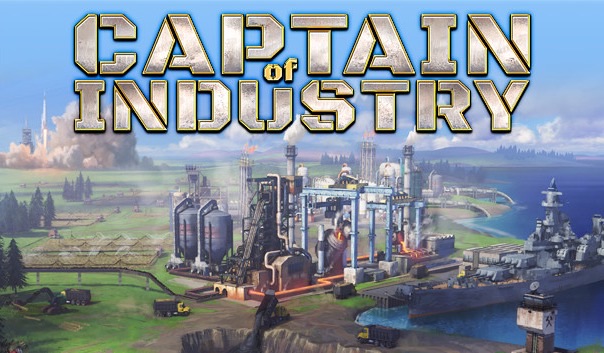
The moment a factory game makes you dig, you stop thinking in belts and start thinking in earth. Captain of Industry treats terrain as a raw material: every hill is a logistics barrier, every pit a storage opportunity, and the act of excavation reroutes your entire plan. You are not just building a factory on a map; you are building the map itself.
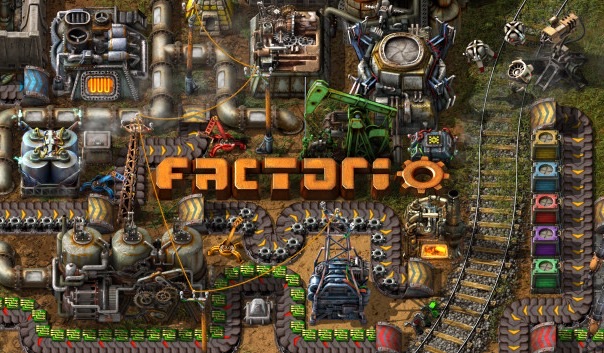
Factorio, by contrast, treats the ground as a passive surface. Its challenge is not reshaping land but managing throughput—balancing ore patches, oil fields, and belt mathematics until the factory hums. The tension between these two visions is the core of the comparison. In Captain of Industry, difficulty compounds because terrain logistics interact: a mine at the bottom of a canyon forces conveyor climbing, a settlement on the coast demands food shipments, and every expansion triggers a new earth-moving puzzle.
In Factorio, difficulty comes from entropy—the constant need to scale, debug, and optimize, with biters adding a production problem wearing teeth. One game asks you to fight the land; the other asks you to fight chaos. Your preference for one kind of struggle will determine which factory fantasy sticks.
Who should terraform their island
Choose Captain of Industry if you want a factory that feels like a settlement. The island is not just a backdrop; it is a character with contours that dictate your logistics. You will excavate terrain to create space, route belts around cliffs, and turn your attention to a population that must eat. The settlement premise means your factory has a purpose beyond itself: food production, ship expeditions to the world map, and farming all weave into the industrial loop.
There is no combat, but the environment provides constant pressure. Terrain excavation becomes a logistics layer of its own, and the difficulty compounds in a way that rewards careful planning of earthworks. The diesel-stained island industry creates an immersive atmosphere, a sense of place that many factory games lack. If you enjoy survival-tinged base building, where your colony's needs shape your factory's layout, or if you like the idea of shaping the battlefield before you fight the throughput battle, this is your dirt-under-nails experience. It is a single-player journey, but one that redefines what a factory can be when the ground itself is part of the puzzle.
Who should chase the megabase
Choose Factorio if your idea of a good time is a pure throughput puzzle. The game strips away survival distractions (or ramps them up if you want) to focus on one thing: building ever-larger, ever-more-efficient factories. The plot is simple—launch the rocket—but the real story is in your blueprint designs, your bot networks, and the megabases they enable. The combat, if you enable it, is just another logistics problem: biters are threats that require production solutions, not tactical gameplay.
The mod ecosystem is unmatched, offering thousands of ways to twist the formula, from total overhauls to quality-of-life tweaks. And if you want to share the obsession, co-op factories scale famously well, letting multiple engineers collaborate on a single sprawling base. Every base becomes a distinct engineering thesis, and the factory hum is its own hypnotic reward. If you want to plan belts to the horizon, obsess over ratios, and never run out of things to optimize, Factorio is your game.
It is the genre king for a reason, and its focus on entropy—the slow decay of order into chaos—makes it a timeless challenge for anyone who wants to prove their mastery over production.
Key facts, side by side
Playtime figures are community-reported estimates from HowLongToBeat (captured 2026-08-16), not main-story completion times.
Similar Games to Consider
Based on what you like in both games