Roots of Pacha vs Stardew Valley
See how two games stack up across what matters most to you.
Short answer
Roots of Pacha and Stardew Valley are both farming sims, but they serve different priorities. Stardew is the deeper solo experience with combat, dungeons, and a massive mod scene. Roots of Pacha shines as a day-one co-op game with a shared clan economy, invention-based progression, and a gentler, combat-free loop. Choose Stardew for solo depth and content volume; choose Pacha for smoother group play from the start.
Side-by-side Comparison
Roots of PachaStardew Valleyimportance
The stone-age twist and the co-op question
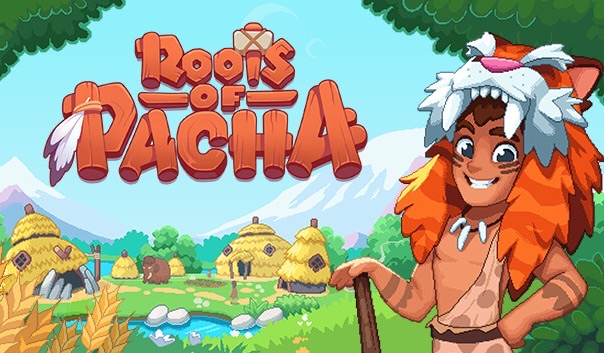
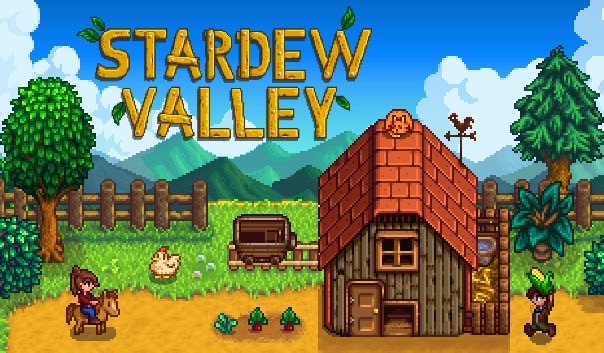
The starting point for this comparison is almost too easy: Roots of Pacha is routinely described as 'Stardew Valley in the stone age.' That shorthand is fair for the surface, but the two games diverge sharply when you scratch the shared farming core. The most pressing fork is co-op. Stardew Valley's multiplayer is mature, with online and split-screen support for 1-4+ players, and everyone shares one farm economy.
Roots of Pacha was built with day-one co-op in mind, letting the whole clan share an economy from the first hour. The tension is not about which game has more features—Stardew's catalog is the reason people call it 'the classic'—but about what you are optimizing for. Pacha's entire loop is tuned around collective invention and shared progress, making it the genre's best purpose-built co-op farm.
Stardew, by contrast, is deeper alone, with quiet personal arcs and a denser web of systems. The decision ultimately hinges on whether you have a group ready to settle the prehistoric valley together, or whether you want a solitary, sprawling valley to shape at your own pace.
Choose Roots of Pacha for a gentle, shared start
If you and a partner or a group plan to play from day one, Roots of Pacha is the more coherent choice. Its co-op is not a patch onto a solo game; it is the foundation. The whole clan shares one economy, so everyone's work feeds a common pool, which reduces the friction of coordinating separate inventories or finances. Inventing ideas—discovering tools, crops, and structures through a shared idea tree—replaces the money grind of Stardew's early game.
That shift makes progression feel more collaborative and less like a race to hoard gold. And if combat is not your draw, Pacha has none at all; the only pressure comes from seasonal planning, and there are no fail states. The animated prehistoric valley and evolving village create a warm, alive backdrop for your group's experiments. Animal breeding offers a lighter form of specialization, while the order in which you unlock inventions and lay out your farm still leaves room for distinct paths.
It is a gentler, more harmonious rhythm—ideal for players who want the social and creative sides of a farm sim without the spike of a mine. If you are seeking a smoother co-op experience with a cohesive clan premise, this stone-age world was built for you.
Choose Stardew Valley for solo depth and ceaseless content
Stardew Valley is the pick when solo depth and sheer content volume matter most. Its villager heart events and quiet personal arcs carry real emotional weight, even though there is no central dramatic plot. The map is compact but steadily opens: caves, desert, and Ginger Island unfold at your pace, and while the combat is deliberately simple—a handful of weapons and rings, no advanced mechanics—it still adds a layer Pacha lacks entirely.
The game offers more systems to engage with: professions, skill paths, festivals, and many viable ways to make money. Whether you want to focus on fishing, mining, farming, or building relationships, there is a route for you. The mod scene is another major part of the appeal, letting you reshape the valley well beyond its original boundaries. For difficulty, Stardew is as forgiving as Pacha—almost nothing punishes you hard, and time management is the only real pressure.
But the breadth of activities and the emotional texture of Pelican Town give it a longer, richer solo tail. If you are playing alone and want a game that will occupy you for hundreds of hours, with room to specialize and a community of modders to expand it, Stardew remains the classic for a reason.
Key facts, side by side
Playtime figures are community-reported estimates from HowLongToBeat (captured 2026-08-16), not main-story completion times.
Similar Games to Consider
Based on what you like in both games