PlateUp! vs Overcooked
See how two games stack up across what matters most to you.
Short answer
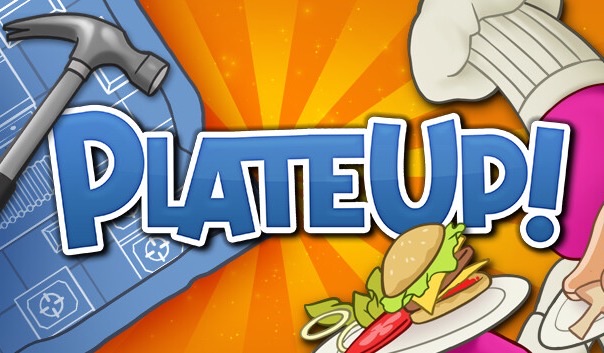
Both are chaotic co-op party kitchens with single-player and co-op modes, and they tie on co-op quality. The split is what happens between shifts. PlateUp! runs a restaurant through fifteen escalating days, with layout, appliances and franchise cards branching every run and a stiffer day-15 overtime test. Overcooked is the 2016 original: absurd kitchen dioramas, three-star coordination, shorter sittings and a lighter curve. We think groups who want progression with their panic should pick PlateUp!, and groups who want the original friendship stress-test in shorter, lighter sessions should pick Overcooked.
Side-by-side Comparison
PlateUp!Overcookedimportance
Progression between shifts is the dividing line
On most of what we score, these two are the same game seen from two angles. Neither has combat. Story barely registers in either: PlateUp! says the menu is the plot, and Overcooked offers an onion apocalypse. Exploration is restaurant floors in one and kitchen gauntlets in the other, and both earn the same co-op quality mark, PlateUp!
for online four-player kitchens with real role division, Overcooked as friendship stress-test gold. The gap opens on build variety, and it is the widest gap in this comparison. In PlateUp! you run a restaurant through fifteen escalating days and choose layout, appliances and automation between shifts.
Franchise cards branch each run, and losing resets the franchise deeper, so every attempt plays out differently. Overcooked's build-variety mark rests on chef cosmetics, which is why it lands so far below PlateUp! there. Two smaller differences sit beside it. PlateUp! is the stiffer test, because day-15 overtime punishes unautomated chaos, while Overcooked's challenge is three-star coordination.
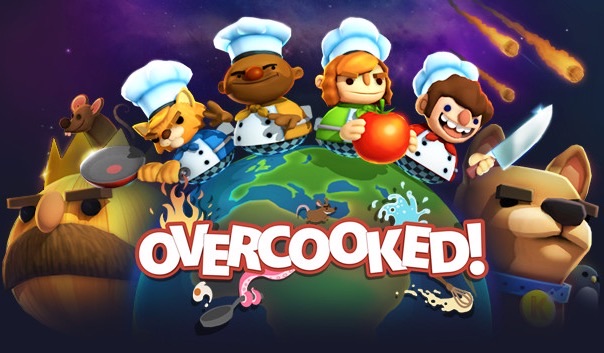
Overcooked leads on world immersion: its absurd kitchen dioramas of split counters, rat-infested trucks and earthquake-cracked kitchens read louder than PlateUp!'s clean toy diners. Overcooked is also the shorter game, both per sitting and across a full playthrough, and PlateUp! alone carries a Strategy tag.
Choose PlateUp! for runs that branch and a kitchen that grows
We think PlateUp! is the pick for groups who want their panic to lead somewhere. Its blurb calls it Overcooked meets roguelite permanence, and that is the whole case. You run a restaurant through fifteen escalating days, and between shifts you choose layout, appliances and automation. Franchise cards branch each run, so the restaurant you are managing this time is not the one you lost last time.
Lose and the franchise resets deeper, which turns each failed run into setup for the next. That structure also makes it the harder of the two. Day-15 overtime punishes unautomated chaos, so a group that plays every shift by shouting and sprinting will hit a wall on the final day. The Strategy tag sits on PlateUp! and not on Overcooked, and it is earned in those between-shift decisions. Co-op is where the two tie, but PlateUp!'s version is specific: online four-player kitchens with real role division.
If your group plays over the internet, that is a concrete point in its favour. Expect sittings of 30-90 min and a 14.8-hour playthrough, both longer than Overcooked, which suits players who want a campaign-sized commitment from a kitchen game rather than a quick round. The trade is presentation. Its diners are clean toy diners, and it gives up the absurd kitchen dioramas that Overcooked leads on.
Choose Overcooked for the shorter, sillier original
We think Overcooked is the pick for groups who want the friendship stress-test itself and would rather not manage a franchise around it. This is the 2016 original, the one that invented co-op cooking panic, and its blurb is proud that it is rawer than its sequel. The challenge is three-star coordination: clearing kitchen gauntlets well enough to earn three stars, with the chaos coming from the rooms themselves, where PlateUp!
layers between-shift decisions on top. Those rooms are why it leads on world immersion. Split counters, rat-infested trucks and earthquake-cracked kitchens are absurd kitchen dioramas, and they carry more personality than PlateUp!'s clean toy diners. Onions have never caused this much yelling, as the blurb puts it, and the story score amounts to an onion apocalypse. It is also the lighter and shorter option.
Difficulty sits a step below PlateUp!, sessions run 20-60 min, and a full playthrough is 7.8 hours. That fits a party night where the group wants to play a few levels, laugh, and stop, a far lighter load than PlateUp!'s fifteen-day restaurant runs. What you give up is build variety. Overcooked's mark there comes from chef cosmetics, while PlateUp!'s comes from layout, appliances and franchise cards. If that sounds like a relief rather than a loss, Overcooked is your kitchen.
Key facts, side by side
Playtime figures are community-reported estimates from HowLongToBeat (captured 2026-08-16), not main-story completion times.
Similar Games to Consider
Based on what you like in both games