One Step From Eden vs Slay the Spire
See how two games stack up across what matters most to you.
Short answer
One Step From Eden and Slay the Spire share a deckbuilding core but demand different minds. Eden is a real-time bullet-hell where you weave spells in frantic bursts, perfect for players craving reflex challenges, local co-op, and PvP. Spire is a turn-based calculation game, teaching cleanly and offering deep Ascension climbs for those who prefer deliberate strategy. Choose Eden for adrenaline, Spire for chess-like depth.

Side-by-side Comparison
One Step From EdenSlay the Spireimportance
Real-Time Chaos or Turn-Based Chess
The comparison between One Step From Eden and Slay the Spire is not about which deckbuilder is superior; it's about what you want from your decision-making. Eden openly advertises itself as Slay the Spire at real-time speed, which immediately signals a fundamental difference in execution. While both games ask you to build a synergistic deck, the moment-to-moment gameplay splits them apart.
In Eden, every second is a flurry of movement, dodging projectiles, and casting spells with precise timing. Your brain works in several-decisions-per-minute mode, where planning ahead is secondary to reacting to the chaos around you. Spire, conversely, presents a turn-based board where you read enemy intents, calculate the exact damage and block values, and execute a plan with no time pressure.
The tension lies not in which is mechanically richer, but in the heart rate you prefer. Spire's combat depth is in the enormous skill ceiling of its turn math—each decision cascades into later turns, and reading the spire becomes a discipline. Eden compresses that depth into split-second choices, where a misstep costs you health, and your reflexes are as important as your deck composition. Both demand mastery, but they train different muscles: one for speed, the other for foresight.
Choose Eden for Adrenaline and Company
One Step From Eden is the game for you if your gaming sessions feel alive only when your pulse quickens. Its bullet-hell execution tests are not optional; they are the core of the experience. You don't just play a deck—you pilot it through a warzone of telegraphed attacks and screen-filling patterns. If you've ever enjoyed games that reward split-second decisions, where a perfect dodge or a well-timed spell weave feels like a victory in itself, Eden delivers that satisfaction in spades.
The real-time flow is relentless, pushing you into a state of flow where you're making hundreds of decisions per minute, and every one of them matters. Moreover, Eden brings a social element that Spire doesn't have. Local co-op and PvP aren't just added perks; they transform the game. You can share the chaos with a friend, coordinating your spell fields and reviving each other, or you can duel and see whose reflexes are sharper.
The variety of builds is sprawling, with spell pools and artifact synergies that encourage experimentation—but you'll experiment at speed, learning by failing fast, not by pondering. The crisp pixel warzones and boss vignettes hint at a world that, while not deep, sets a tone of urgent adventure. If you want a deckbuilder that respects your skill with a controller as much as your brain, Eden is your match.
Choose Spire for Deliberate Mastery
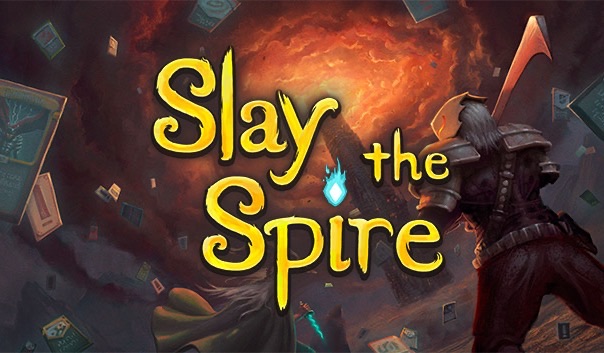
Slay the Spire is the choice for players who find joy in the clarity of turn-based calculation. It offers what is arguably the genre's cleanest teaching design—every turn is a puzzle with readable information, and it never asks for twitch reflexes. The combat depth emerges from the intricate turn math: you study enemy intents, weigh resource costs, and anticipate future turns, with an enormous skill ceiling that keeps revealing new layers.
If you appreciate a game where a perfect run is a testament to your foresight and planning, Spire provides that intellectual satisfaction. Its build variety is exceptional, with four distinct characters and an almost infinite array of draft lines that define replayability. Each run is a new puzzle in deck construction, and learning to solve it is a long, rewarding journey. The Ascension levels—up to 20—offer a legitimate discipline for those who want to master the game over years.
Spire's world immersion is intentionally minimal; the cards themselves are the universe, and the functional art serves the gameplay. It's a single-player experience, which for some is a feature—you can take your time, analyze every choice, and progress at your own pace. If you prefer a chess clock over a stopwatch, and the idea of calculating the perfect line without time pressure appeals to you, Spire is the deckbuilder you'll keep coming back to.
Key facts, side by side
Playtime figures are community-reported estimates from HowLongToBeat (captured 2026-08-16), not main-story completion times.
Similar Games to Consider
Based on what you like in both games