Monster Train 2 vs Slay the Spire
See how two games stack up across what matters most to you.
Short answer
Monster Train 2 is a flashier, faster deckbuilder focused on multi-floor defense and clan combinations, while Slay the Spire offers a purer, slower climb with foundational balance. If you want big numbers and wild synergies, choose Monster Train 2. If you prefer deliberate drafting and learning the genre's basics, choose Slay the Spire. Both are challenging, but they reward different kinds of thinking.
Side-by-side Comparison
Monster Train 2Slay the Spireimportance
The New Engine vs. The Founding Text
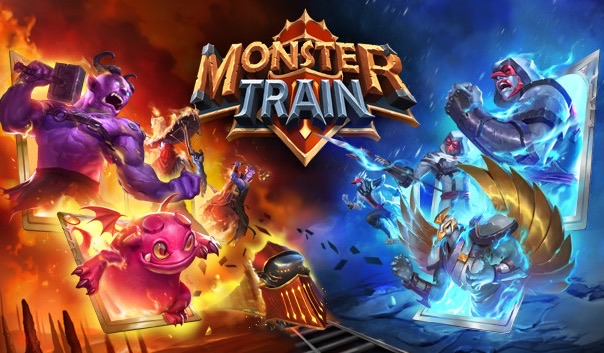
Monster Train 2 and Slay the Spire sit at opposite ends of the deckbuilder spectrum. Slay the Spire is the genre's founding text, a minimalist climb up a node map where every card draft and route choice matters. Monster Train 2, by contrast, is a new engine built for spectacle: you defend a multi-floor train, route units between floors, and combine two clans to create explosive synergies.
The two games share DNA but diverge in pace and philosophy. Slay the Spire rewards patience: you read enemy intents, calculate turn math, and build around a single character's identity. The climb is slower, deliberate, and unforgiving. Monster Train 2 rewards aggression: you want bigger numbers, faster, and the vertical defense plus clan pairing means every run feels like a fireworks show.
Its Covenant ranks climb mercilessly, offering its own challenge. The real tension is timing. Spire teaches the fundamentals of drafting, resource management, and risk assessment. Monster Train 2 assumes those basics and asks you to layer on floor routing and clan combinatorics. If you're new to the genre, Spire's clean design is a better classroom.
If you're ready to experiment, Monster Train 2 is a wilder ride. Neither is universally "better"—only a question of what you want to learn or enjoy right now.
Choose Monster Train 2 for Vertical Chaos and Clan Chemistry
Monster Train 2 is the choice if the idea of defending a three-floor train excites you. The vertical multi-floor defense isn't just a gimmick; it's the core puzzle. You must decide where to place units, how to route spells, and which floors to sacrifice. This spatial layer adds complexity that Slay the Spire never attempts, and it's a big reason why combat depth runs deep. The clan-pairing system is the other major draw.
You pick two clans and combine their cards and abilities, creating run identities that multiply far beyond single-character variety. The synergy potential is enormous: you might pair a defensive clan with an aggressive one, or two complementary styles, and the combinations create unique runs every time. If you're tired of playing one class and want to mix and match, this is your sandbox.
The pageantry helps too. Monster Train 2's stylish infernal setting and vivid art make every battle feel like a spectacle, whereas Spire's functional art deliberately fades into the background. If you want your deckbuilder to feel bombastic and fast, with bigger numbers and quicker payoffs, Monster Train 2 delivers. The Covenant ranks escalate mercilessly, so the challenge never disappears, but the ride is on a different frequency—louder, flashier, and more explosive. If that sounds appealing, start here.
Choose Slay the Spire for the Purest Draft-and-Route Discipline
Slay the Spire is the better fit if you want the purest draft-or-skip discipline. There are no floor placements or clan pairings to distract you. The focus is on the card draft itself: every pick matters, and skipping a card is often the strongest play. This minimalist design is why Spire remains the perfect teacher—it strips away the excess to show you exactly how a deckbuilder works. The climb is slower and more deliberate.
You progress node by node, choosing routes that balance risk and reward, always aware that a single wrong turn can end your run. Ascension 20 is a legitimate discipline, a test of skill that demands mastery of intent-reading and turn math. The skill ceiling is enormous, but the learning curve is fair: the game teaches you through failure, and every loss is a lesson. Spire offers four distinct characters, each with a fundamentally different card pool, and infinite draft lines within each class.
The replay value comes from deepening your understanding of a single character, not from mixing clans. If you want to understand the genre's foundational balance and appreciate a design where the cards themselves form the world, Spire is unmatched. Its functional art lets you focus on the mechanics, which is exactly the point. If you're after a calm, considered, and cerebral deckbuilding experience, Spire is the classic you'll return to again and again.
Key facts, side by side
Playtime figures are community-reported estimates from HowLongToBeat (captured 2026-08-16), not main-story completion times.
Similar Games to Consider
Based on what you like in both games