Touhou Danmaku Kagura Phantasia Lost vs Muse Dash
See how two games stack up across what matters most to you.
Short answer
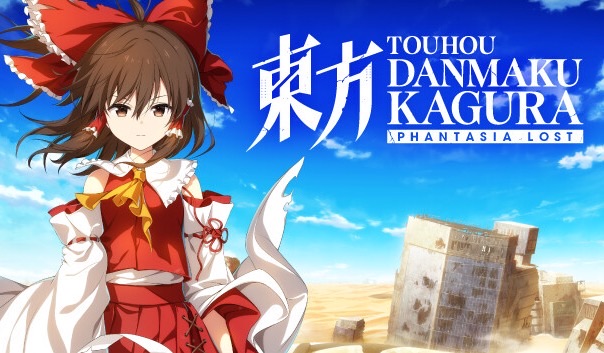
Both are anime-styled rhythm gateways with doujin roots, but they reward different habits. Touhou Danmaku Kagura Phantasia Lost is a shrine of devotion, offering Touhou arranged songbooks, six-lane charts, and a danmaku hybrid mode that deepen with commitment. Muse Dash is a candy rush that rewards showing up, with instant two-button flow and a friendlier learning floor. Choose Kagura for depth and story, Muse Dash for immediate accessibility and pop art.
Side-by-side Comparison
Touhou Danmaku Kagura Phantasia LostMuse Dashimportance
Shrine Discipline vs. Candy Rush
The real contrast here is not about which game is more 'anime' — both wear that badge proudly. It is about what each asks of you. Touhou Danmaku Kagura Phantasia Lost treats rhythm as a devotional act. It hands you Gensokyo rebuild tale, a story that frames your playthrough as a restoration project, and then wraps that narrative around a thick arranged songbook from the Touhou universe.
The six-lane charts are not just wider; they are a discipline, a way of reading patterns that demands your attention to flourish. Even the danmaku hybrid mode, which layers bullet-hell reflexes onto the rhythm core, is an extension of that shrine-like seriousness, a test of how far you have committed to its language.
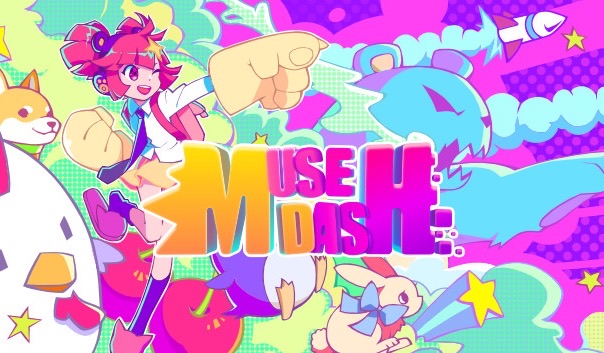
Muse Dash is the opposite temperament. It is a candy-pop art blast that does not care if you come prepared; it opens with a two-button flow that feels like play from the first note. Its sugar-rush visuals do the emotional lifting, carrying the mood from screen to beat. Where Kagura builds a world you inhabit through effort, Muse Dash builds a runway you slide down for instant delight. These are two different philosophies of what a rhythm game should be, and both are valid.
Choose Kagura If You Seek Devotion
Pick Touhou Danmaku Kagura Phantasia Lost when you want a rhythm game that grows with your commitment, not just your reaction time. The Touhou arranged songbook is a treasury for fans and a deep well for newcomers curious about the doujin scene, but the real hook is the chart depth. Six lanes give you a more complex canvas, one that rewards learning the layout as a craft rather than a reflex.
If you are the type who wants a story mode stitched into your play sessions, the Gensokyo rebuild tale offers a narrative reason to keep going, a world you are actively rebuilding each time you hit a note. The danmaku hybrid mode is a bold experiment, blending bullet-hell dodging with rhythm in a way that feels like a natural evolution of both genres, and it is exclusive to this experience.
The difficulty curve rewards patience: Lunatic charts exist for those who seek the ultimate test, but the progression itself is a song-list journey, not a wall. You are not just playing songs; you are living in a project. This is a game for players who enjoy the act of mastery, who find satisfaction in watching their skill accumulate like offerings at a shrine.
Choose Muse Dash for the Instant Rush
Muse Dash is for when you want the dopamine hit without the homework. Its two-button control scheme is an invitation, not a barrier; you can be tapping to the beat within seconds, and that accessibility is a strength, not a compromise. The candy-pop art blast is not just window dressing — it is the entire atmosphere, a visual sugar rush that pairs perfectly with the music and makes every session feel like a celebratory sprint.
If you are coming from other rhythm games or just want a game you can pick up for a quick break, the friendlier learning floor means you are never overwhelmed at the start. And do not mistake its charm for shallowness: the 11-star charts hide real teeth, waiting for those who chase the high score. The character and elfin perks let you tweak your runs, giving you a small but meaningful layer of build variety that respects your time.
There is no story to follow, just a song list progression, and that is fine when the loop is this instantly gratifying. Muse Dash respects your schedule, rewarding you the moment you show up, and for many, that is the perfect rhythm companion.
Key facts, side by side
Playtime figures are community-reported estimates from HowLongToBeat (captured 2026-08-16), not main-story completion times.
Similar Games to Consider
Based on what you like in both games