Rift of the NecroDancer vs Crypt of the NecroDancer
See how two games stack up across what matters most to you.
Short answer
Rift of the NecroDancer turns the beat into a lane-based rhythm game, where enemy patterns become note charts and boss duels remix songs. Crypt of the NecroDancer is the original roguelike dungeon crawler, where movement itself is the rhythm and pattern knowledge under tempo pressure defines mastery. Choose Rift for pure chart-focused play with modern remixes; choose Crypt for procedural floors, local co-op, and a decade of characters. Both share the same beat law, but one is a concert hall, the other a dungeon floor.
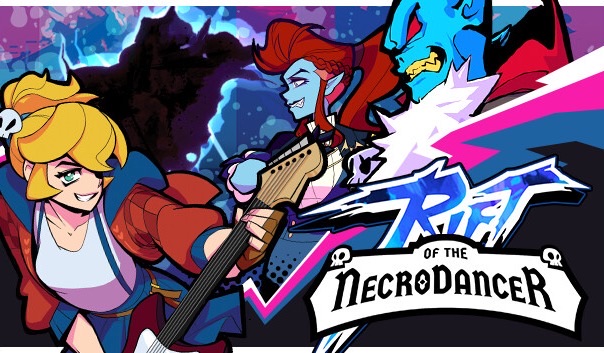
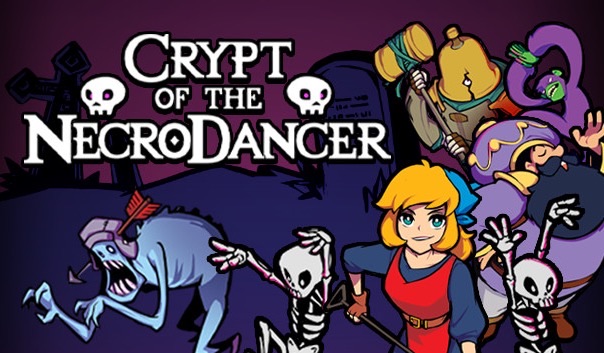
Side-by-side Comparison
Rift of the NecroDancerCrypt of the NecroDancerimportance
Lanes vs. Dungeon Floors: The Same Beat, Opposite Stages
The NecroDancer family's core law is the same: every action you take must land on the beat. But Rift of the NecroDancer and Crypt of the NecroDancer interpret that law in opposite directions, and that contrast is the whole question. Rift is a lane-based rhythm game. Enemies appear as note patterns, and your inputs are charted like a song—each encounter is a composed sequence rather than a space to navigate.
Crypt is a dungeon crawler. You move square by square on procedural floors, and the rhythm governs your movement, attacks, and even your pause between steps. The result is that one asks you to read a chart, while the other asks you to improvise within a grid. Rift's structure is closer to a concert hall: the stage is set, the music leads, and you perform.
Crypt's structure is closer to a dungeon floor: the layout shifts, the danger is spatial, and the beat is a constraint on your exploration. They share a musical heart, but the tension between composed lanes and emergent floors defines the choice.
Choose Rift for Pure Chart Mastery and Modern Stages
If your ideal rhythm game is about mastering a chart—reading patterns, hitting precise timing windows, and chasing high scores on leaderboards—Rift of the NecroDancer is built for you. Its enemy patterns function as note logic, turning combat into a continuous stream of visual and auditory cues that demands pure rhythm-game reflexes. Boss duels remix the charts, adding a layer of complexity that rewards pattern recognition and execution.
The game offers a song select and mode select, so you can focus on the specific tracks that challenge you, and modern remixes of the classic soundtrack give familiar melodies a fresh tempo. The 'impossible' difficulty lives up to its name, offering a steep but rewarding learning curve for players who want to push their accuracy to the limit. If you care less about exploring a dungeon and more about the flow of a perfect run—where every input is part of a musical phrase—Rift's lane-based design will feel like a dedicated stage for your skill. It's a single-player experience, but the leaderboards provide a competitive pulse for those who measure progress in rank.
Choose Crypt for Procedural Dungeons and a Ten-Year Legacy
If you want the original roguelike dungeon experience that invented movement-as-rhythm, Crypt of the NecroDancer is the deeper well. Its procedural floors mean no two runs are identical, and the beat-bound exploration forces you to make tactical decisions under tempo pressure. Pattern knowledge is the whole art: learning enemy behaviors and boss tells becomes a study of timing and positioning, not just note reading.
The game's characters act as rule-mutators, each one changing how you approach the beat, from Aria's one-hit fragility to other heroes that alter the rhythm itself. This variety creates wildly different playstyles, and the local co-op mode lets you share the dungeon floor with a partner. Crypt's world immersion comes from its soundtrack being the soul of the dungeon—every zone's music shapes the mood and the challenge.
With a decade of DLC and characters, the game offers a breadth of content that Rift's song-and-mode select can't match. If exploration, build variety, and a longer-term sense of mastering a living, changing dungeon appeal to you, Crypt's beat-bound floors are the stage you're looking for.
Key facts, side by side
Playtime figures are community-reported estimates from HowLongToBeat (captured 2026-08-16), not main-story completion times.
Similar Games to Consider
Based on what you like in both games