The First Tree vs Journey
See how two games stack up across what matters most to you.
Short answer
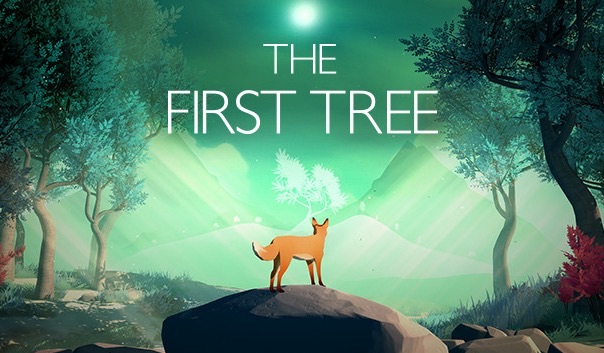
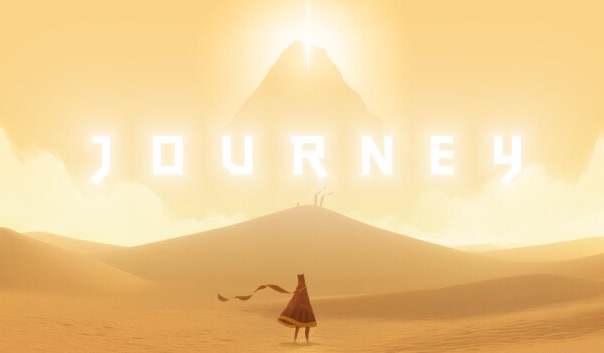
The First Tree and Journey both star a lone figure crossing a hushed world, but they speak different languages. The First Tree is a solo developer’s spoken eulogy for his father: an aurora-lit forest where a fox’s journey mingles with voiced memories. Journey is a frictionless, wordless myth where anonymous companions glide over dunes. If you want a personal confession with light platforming, choose The First Tree. If you want a perfect, co-op pilgrimage with a legendary ending, choose Journey.
Side-by-side Comparison
The First TreeJourneyimportance
Confession vs. Polish
These two games are often called “pilgrimages,” yet they aim at different hearts. The First Tree is a solo developer’s open letter: a fox bounds through snowy vales while a voiced narrator lays out a father’s memory like a treasured object. Journey is a myth cycle told purely in imagery; sand, light, and Austin Wintory’s score act as scripture, leaving no room for spoken words.
That difference is the core tension. The First Tree risks the direct, confessional voice—not a whisper, but a spoken eulogy that lands like a hand on your shoulder. Its open snowy vales invite you to roam, while light platforming keeps the pace unhurried. Journey polishes every grain of sand into a frictionless glide; there is no narrative spoken, only relationships formed through anonymous, wordless companionship.
One is an artist’s diary left open on a forest floor, the other a masterfully cut gem you’re meant to pass between strangers. Neither is better—they simply operate in different registers. The First Tree’s emotional payload depends on you embracing its author’s words; Journey’s relies on you surrendering to pure motion and the silent bonds that form in the desert. Knowing which you seek—a story told to you, or a story you feel in your bones—will point you toward your snow or your sand.
Choose The First Tree if you want to hear a story
If a voiced family eulogy sounds more moving to you than a silent myth, The First Tree is your companion. This is a game that trusts the power of spoken confession: a solo developer turns his own grief into a fox’s journey through aurora-lit northern woods, and those words are not decorative—they are the heart. You are not just wandering; you are listening to someone process loss in real time, and that honesty can feel more intimate than any cinematic.
The open snowy vales give you room to breathe and absorb the narrative at your own pace; there is no combat and only light platforming, so the obstacles never distract from the emotional thread. You are free to explore the stillness, to pause under the aurora and sit with what has been said. This is a single-player experience—no strangers will appear, no anonymous companion will share your trail.
That solitude fits the story’s confessional nature: some eulogies are meant to be spoken to a single listener. If you value the vulnerability of a small, personal project over the polish of a larger team, and if you want your game to speak to you in plain language, The First Tree will feel like a gift. It is not a perfect machine; it is a heartfelt letter.
Choose Journey if you want the genre’s perfect pilgrimage
If the phrase “Journey in the snow” makes you expect the same perfect polish, you might be drawn to the game that set the standard. Journey is the genre’s immaculate pilgrimage: frictionless controls, no dialogue, and a world that unfolds like a standout title. It wins on world immersion because every dune field and buried mural feels like part of a seamless, sacred design, backed by Wintory’s score that becomes the story’s true voice.
Its co-op is the soul: you can meet anonymous strangers on your path, communicate only through nonverbal gestures, and share that wordless companionship without a single syllable. That is an experience no other game has replicated with such finesse. The game is zero-gate: you can’t fail, you can’t get stuck, you can only move forward, which paradoxically makes it a perfect meditative walk.
Beyond the gameplay, there is that mountain, that ending—an image that has become shorthand for emotional potency in games. If you want to see why this desert pilgrimage is constantly compared to, rather than constantly compared with, The First Tree, you should enter Journey expecting a nearly flawless execution of a limited idea. It is not a confessional or a personal letter; it is a cathedral built by a studio at the height of its craft, inviting you to walk through it with a stranger at your side.
Key facts, side by side
Playtime figures are community-reported estimates from HowLongToBeat (captured 2026-08-16), not main-story completion times.
Similar Games to Consider
Based on what you like in both games