Paladins® vs Overwatch®
See how two games stack up across what matters most to you.
Short answer
The real difference is who controls the tuning. Paladins hands you card decks to reforge each champion's kit, promoting build variety and lighter hardware demands. Overwatch 2 holds that power in curated balance patches, delivering industry-leading polish, deeper counter-swapping, and a bigger player pool. If you love crafting your own hero rules and don't need top-tier spectacle, Paladins invites experimentation. If you want a tightly balanced, polished competitive scene with robust team synergy, Overwatch 2 is the polished giant that delivers. Both have their place—choose based on whether you want the knobs or the fine-tuned machine.
Side-by-side Comparison
Paladins®Overwatch®importance
Customization vs. Curation
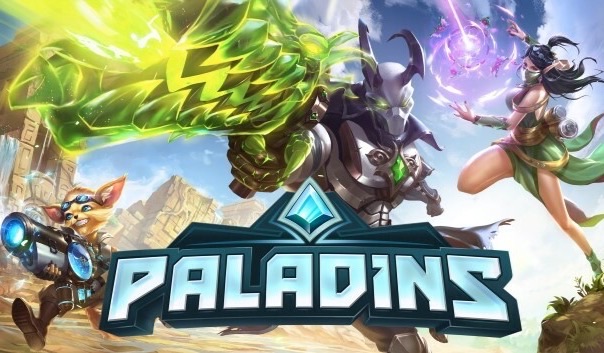
The core tension boils down to who you trust with the balance knobs. Paladins gives you the screws: per-champion card decks let you re-tune abilities, cooldowns, and stats to suit your playstyle. This is the card-forged challenger's promise—your loadout is a personal statement, a build you can argue about in the lobby.
Overwatch 2, by contrast, keeps that authority in the hands of Blizzard's designers. The polished giant offers a tighter, more curated ruleset where hero switching becomes the real build system, and counter-picking plus ultimate economy run deep. This isn't a matter of one being objectively better; it's a philosophical fork.
Do you want a sandbox where you forge your own hero, or a meticulously tuned stage where the choreography is perfected? Paladins rewards loadout-meta literacy, while Overwatch 2 demands role mastery and game sense, with GM being "another sport." Both paths offer deep combat, but they ask you to engage with their systems differently: one by crafting, the other by reading the meta. The tension is real, and your preference will dictate which world feels like home.
The Crafters' Arena
Choose Paladins if you're the kind of player who never leaves a slider untouched, who sees a champion and immediately wonders, "What if I tweak this?" The card-built loadouts are your canvas. Each champion's deck lets you mold their kit, fostering build variety that the record confirms as its edge. Five-stack sieges become experiments in team composition, where your custom loadout might unlock a synergy no one else has tried.
This is a game that respects your creativity and rewards the hours you spend theorycrafting. Moreover, Paladins asks less from your hardware—a lighter reach, meaning you can jump into those bright fantasy arenas even on modest machines. If you're tired of meta-slavery and want to own your decisions, if the idea of a build that's uniquely yours energizes you, then Paladins is the challenger that hands you the keys. Sure, you'll need to keep up with loadout-meta literacy, but the payoff is a deeper sense of ownership. Here, the balance is what you make of it, and that's exactly the point.
The Polished Stage
Choose Overwatch 2 if you crave a competitive experience that's been sanded to a shine. The record speaks of industry-leading polish and a larger player pool—two pillars that make the ranked ladder feel alive and meaningful. This is the polished giant's domain: tighter competitive rulesets mean every match is a test of refined skill, where team synergy isn't just encouraged, it's the entire game.
If you relish the chess match of counter-swapping and the economy of ultimates, Overwatch 2's depth is unmatched. The learning curve is steeper—role mastery plus game sense can take you from bronze to grandmaster, and the journey is as demanding as any sport. But that's the appeal: you're not just playing a shooter; you're mastering a system. The cinematic lore has moved partly in-game with the year-long Reign of Talon arc, and the world's optimistic sci-fi staging creates a backdrop for focused competition.
If you want to be part of a massive ecosystem, improve against the best, and trust that the balance is in good hands, Overwatch 2 is your arena. Here, the knobs are hidden, but the machine runs like a dream.
Key facts, side by side
Playtime figures are community-reported estimates from HowLongToBeat (captured 2026-08-16), not main-story completion times.
Similar Games to Consider
Based on what you like in both games