Hades vs Dead Cells
See how two games stack up across what matters most to you.
Short answer
Hades is the better first roguelite for most people because it wraps combat in a dense narrative that unfolds with every death, letting the story itself teach you the loop. Dead Cells is the deeper well for players who stay for the mechanics: its movement, animation-cancel tempo, and mutation synergies reward mastering the craft across hundreds of hours. Choose Hades for a complete arc with expressive builds and immersive world; choose Dead Cells for pure mechanical depth, branchier exploration, and escalating difficulty that punishes greed.
Side-by-side Comparison
HadesDead Cellsimportance
Two on-ramps, two destinations
For years, Hades and Dead Cells have been the twin on-ramps to action roguelites, recommended in the same breath and chosen between by nearly every newcomer. Yet they lead to different destinations. Hades treats each run as narrative fuel: death isn't a failure state but the engine that pushes conversations forward, reveals character arcs, and unlocks the next beat of a story that already has a definitive end.
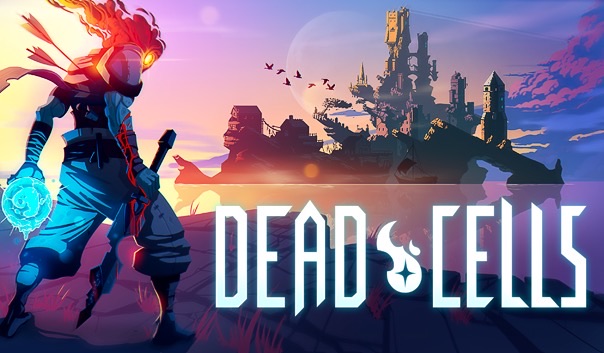
The underworld is hand-painted and scored to feel like a place you return to, not a level you clear. Dead Cells, by contrast, keeps story deliberately minimal, offering lore in fragments and environmental jokes. Its island is a backdrop for the real star: the combat. The tension here isn't about which is more polished; both are genre benchmarks.
It's about whether you want your death to mean something in a story, or whether the act of dying and retrying is itself the reward. That deciding tension shapes every hour you'll spend with either game.
Who should choose Hades
Choose Hades if a story with your runs matters to you. This is the reference point for roguelike storytelling because every escape attempt is a scene in an ongoing play, and even failure advances the plot. The gods you meet, the keepsakes you carry, the relationships you build—all feed back into the next run, making the loop feel purposeful from the first hour. If you prefer arena combat over platforming, Hades gives you a contained room-by-room brawl where positioning and boon synergies take center stage.
Its six weapon aspects and god-boon combinations remain deeply expressive, allowing you to shape a build and feel it evolve run after run. And because you want a finished arc rather than an endless ladder, Hades delivers: there is a definitive story conclusion, a final beat that rewards your persistence. The Heat modifiers can scale difficulty far up if you crave more, but the core experience is a complete, beautifully told tale. For most people, this is the gentlest, most satisfying gate into the genre.
Who should choose Dead Cells
Choose Dead Cells if pure movement and attack feel are the priority. This is a game you feel in your fingers: animation-cancel tempo, weapon variety, and the precision of every dodge and strike combine into elite-level action depth. The base loop already punishes greed, and each Boss Cell stack adds brutal modifiers that demand mechanical mastery rather than narrative patience. If you want hundreds of hours of escalating difficulty, Dead Cells is a deeper well—there's always another mutation synergy, another weapon build, another way to push your skill ceiling.
Its branching biome routes and rune-gated shortcuts reward exploration inside a run-based frame, so unlike a linear path, every run can unfold across different regions with different dangers. The island's art and mood are strong, but the world serves as a stage for the mechanics, not a living character. If you'd rather explore branching maps than repeat one route, and you stay for the craft of combat itself, Dead Cells will keep you learning long after its story—such as it is—has faded into background texture.
Key facts, side by side
Playtime figures are community-reported estimates from HowLongToBeat (captured 2026-08-16), not main-story completion times.
Similar Games to Consider
Based on what you like in both games