Dead by Daylight vs Phasmophobia
See how two games stack up across what matters most to you.
Short answer
Dead by Daylight turns horror into a competitive contest where a human-run killer hunts a survivor squad through procedural maps, with deep perk builds and licensed icons. Phasmophobia replaces PvP with cooperative dread, using voice-reactive ghosts and audio design to make exploration terrifying. If you crave adrenaline from outsmarting a real mind, choose DbD; if you want shared scares in a hide-and-seek hunt, choose Phasmophobia.
Side-by-side Comparison
Dead by DaylightPhasmophobiaimportance
Two Directions for Screaming with Friends
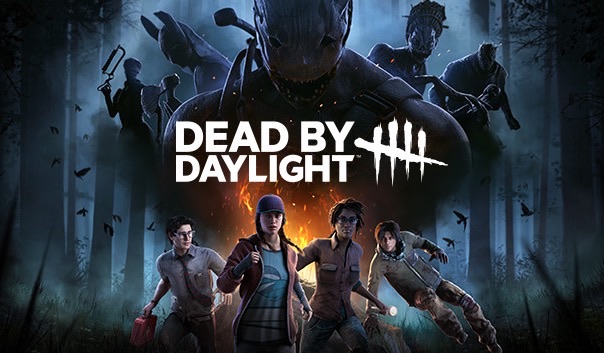
Both games sit at the center of multiplayer horror, but they point the camera in opposite directions. Dead by Daylight aims the threat at you as a predator, a human-controlled killer who adapts, feints, and learns your habits across a handful of procedural trial maps. That predator makes horror competitive: your escape is not scripted, it is outperformed.
Phasmophobia removes the human enemy entirely. You and your team enter houses and asylums to gather evidence of ghosts that react to your voice, and because you cannot fight, your only tool is the courage to keep asking questions while the audio design turns silence into a weapon. The tension in DbD is the mind game, the constant read and counter-read between survivors and killer.
The tension in Phasmophobia is the unknown, unreadable, and unavoidably cooperative. Those are different muscles: one is twitch and adaptation, the other is slow-building dread. Neither replaces the other. They split the horror audience because they split what horror means to a group of friends, one side demanding you beat a human mind, the other demanding you survive your own imagination inside an empty building.
Choose Dead by Daylight for the Hunter
If the thrill of being hunted hits harder when there is a human brain behind the threat, Dead by Daylight is your lane. The killer is another player, so no two pursuits unfold the same way. They can change tactics mid-chase, bait you into dead ends, or abandon one target to pressure a generator across the map. That human layer is what turns looping and mind-game craft into the core skill, because you are not solving a pattern, you are trying to read intentions.
The perk system is the second language of that contest. Hundreds of perk builds let you tailor a survivor for stealth, speed, or rescue, and they also tailor the killer loadout for tracking, pressure, or area denial. The record shows that competitive perk mastery is a stated reason to pick DbD, and the meta can feel like a second job for those chasing optimization. You also get licensed horror icons, which brings gallery-value to a loadout screen.
Make no mistake: this is a stress-inducing, adrenaline-pumping social experiment. If you enjoy losing to a smarter play as much as winning, and you want your horror served with a side of ranked-style growth, Dead by Daylight supplies a feedback loop that Phasmophobia deliberately refuses to offer.
Choose Phasmophobia for the Heart of the Group
Phasmophobia asks you to walk into a house, set up equipment, and ask a ghost questions with a trembling voice. There is no human killer to outsmart, no PvP stress, only the shared weight of the unknown. The game’s core is co-op investigation, and its voice-reactive ghosts create moments that no scripted jump scare can replicate: you speak, the ghost listens, and the room changes. It is the purest expression of the record’s claim that voice-reactive co-op terror is unmatched.
You cannot fight, only hide, which redirects the challenge from mechanical skill to situational nerve. That does not make it easy. Higher tiers of play strip away evidence and mercy, forcing you to rely on behavior and memory. The map variety, from houses to asylums, changes how you move, what you hear, and where you dare to split up. The journal lore is thin, but the haunt is the story, and every investigation writes a new anecdote.
If you come to horror for the catharsis of screaming with friends, for the laughter that follows a close call, or for an atmospheric excuse to hold a microphone with shaky hands, Phasmophobia is the game that turns fear into a bonding ritual. It is a place where the only enemy is the dark, and you face it together.
Key facts, side by side
Playtime figures are community-reported estimates from HowLongToBeat (captured 2026-08-16), not main-story completion times.
Similar Games to Consider
Based on what you like in both games