Stranded Deep vs Green Hell
See how two games stack up across what matters most to you.
Short answer
Stranded Deep gives you a sun-bleached Pacific of procedural islands, raft hopping, and a straightforward crash-to-rescue arc, with dehydration as your main scorekeeper. Green Hell drops you into a claustrophobic Amazon where nutrition, infection, sanity, and a story mode of guilt and hallucination demand everything. Choose Stranded Deep for freedom and elemental simplicity; choose Green Hell for relentless depth and systemic pressure. Both are survival crucibles, but they punish and reward in opposite directions.
Side-by-side Comparison
Stranded DeepGreen Hellimportance
Open Sky vs. Closed Canopy
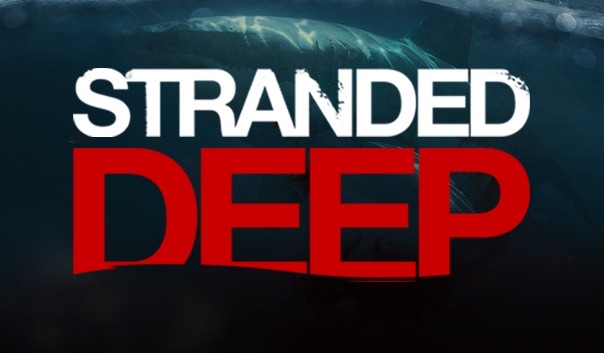
The first thing that separates these two survivors is the shape of the space around you. Stranded Deep leaves you under a huge, glaring sky, surrounded by a flat sea that sparkles with menace. The horizon is always there, but so is the thirst. Dehydration keeps score, and the threats are simple and legible – a shark circling under the raft, a distant island you can see but might not reach.
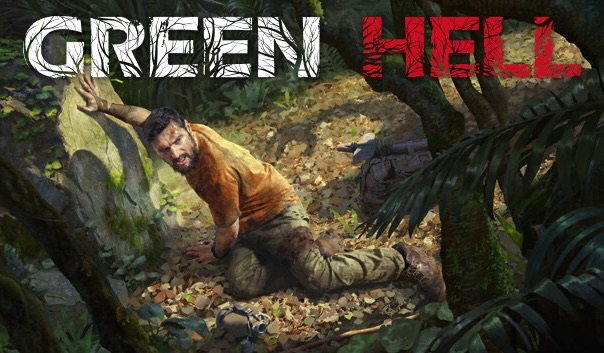
Green Hell replaces that open horizon with a dense, damp canopy that blocks the sun and, with it, any sense of direction. The rainforest is not a backdrop; it is the antagonist, packed with hostile detail that makes every step feel risky. The bottom line is that one game is about space and the other about pressure.
Stranded Deep gives you room to breathe and think, but that openness can feel indifferent. Green Hell closes in on you with a feverish intensity, demanding attention to every wound, every bite, and every creeping doubt in your character's mind. The one you prefer depends on the kind of solitude you are after – the loneliness of the ocean or the claustrophobia of the jungle.
For the Open-Sky Tinkerer
Choose Stranded Deep if the fantasy of island-hopping under an endless sky is what pulls you into survival games. The procedural island seas promise a different geography each time you start, and the freedom to build a raft and set off across the water is central to the experience. Raft architecture matters here; you are not just building a shelter but a mobile base that can carry you between islands, always aware of the shark-patrolled crossings that separate them.
The gameplay is built around a crash-to-rescue arc, which gives you a clear sense of progress even without a scripted story. Combat is limited to shark hunts and a few boss encounters, so the challenge comes from managing your elemental needs – water, food, and exposure – rather than from complex systems. If you want your survival to feel like a sun-bleached sandbox, where the main enemy is the elements and the sea, this is the softer landing.
It is a two-player co-op experience, so you can share the water with a friend, but the game's simplicity is its strength: a straightforward survival loop that values exploration over punishment.
For the Relentless Realist
Green Hell is for players who want their survival sim to punish every mistake and reward deep knowledge. The rainforest's hostile detail is unmatched among its peers, and the systems reflect that: nutrition, infection, and sanity are not abstract bars but integrated parts of your day-to-day struggle. The psychological sanity system adds a layer that Stranded Deep never attempts, making the character's mind as fragile as their body.
This is also the game to pick if you want a real story campaign; the hallucinatory guilt narrative anchors story mode, giving you a reason to push deeper into the jungle. Combat is scrappy – spears and bows that feel improvised – because the jungle itself is the true enemy. Exploration is possible but requires careful routing through dense jungle and river networks, where a wrong turn can cost you.
The learning curve is steep, and the challenge is constant, but for those who like to master systems, it is a deeply satisfying struggle. Co-op supports four players, so you can share the misery, but the difficulty remains punishing, reinforcing the game's overall theme: the rainforest gives no quarter.
Key facts, side by side
Playtime figures are community-reported estimates from HowLongToBeat (captured 2026-08-16), not main-story completion times.
Similar Games to Consider
Based on what you like in both games