Shogun Showdown vs Into the Breach
See how two games stack up across what matters most to you.
Short answer
Both games give you perfect information and demand perfect play, but they ask different questions. Shogun Showdown is a one-lane duel where you build a deck of attacks and position yourself to deliver a combo kata. Into the Breach is a grid-wide puzzle where you move enemies, protect civilians, and solve each turn like a chess problem. Choose Shogun Showdown for a focused, node-map roguelike with a minimalist ukiyo-e look. Choose Into the Breach for the cleanest, most brutal grid tactics where every mistake is your own misread.
Side-by-side Comparison
Shogun ShowdownInto the Breachimportance
One Lane vs One Board: The Core Tension
When you face an enemy that telegraphs its next move, you have a beat of certainty. Shogun Showdown takes that beat and stretches it into a lane. Your ronin and the foe share a single line, and your action queue is a deck you shape each run. The tension is rhythmic: you watch the enemy's planned strikes, then choose tiles that upgrade your abilities, building a sequence that lands perfectly.
Into the Breach takes the same certainty and spreads it across a grid. Every enemy's attack is marked, but the puzzle is displacement—you push, pull, freeze, and reposition to turn their own moves against them. The tension there is spatial: every turn is a knot you must untangle, with civilian lives hanging on your reads.
One game asks you to compose a perfect phrase; the other asks you to redraw the sentence. Both are chess you can win perfectly, but the first is a duel of timing, the second a problem of geometry.
Shogun Showdown: For the Combo Craftsman
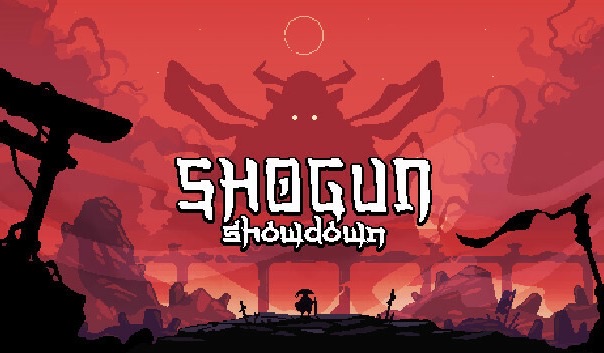
Choose Shogun Showdown if you want a dueling purity that lives entirely in one lane. Your run moves along a node map, letting you pick upgrades and shape your tile set. The combat is a queue-and-position duel: you see the enemy's telegraphed strikes and answer with your own planned sequence. What emerges is a combo kata—a practiced routine that you refine run after run. The praise for its fair telegraphs is true, though the late game gets dense; you will need to read the enemy's entire pattern and weave your strikes between their openings.
That density is the draw. If you enjoy building a specific toolset and then executing it with precision under pressure, Shogun Showdown gives you that loop without distraction. The ukiyo-e pixel minimalism adds a wandering-ronin frame, but the heart is the lane. There is no exploration freedom beyond the node map, and no co-op—this is a solo, focused craft. You are not solving a board; you are perfecting a sequence. If that sounds like your kind of chess, step into the lane.
Into the Breach: For the Puzzle Purist
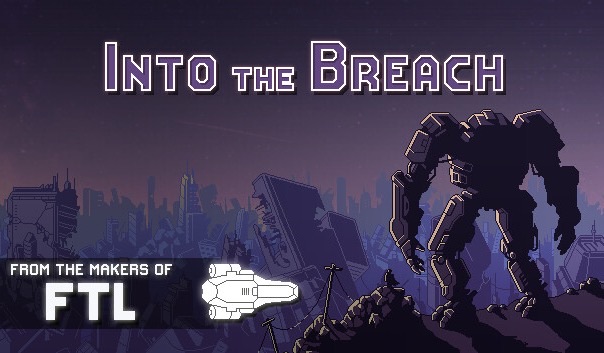
Choose Into the Breach if you want the genre's cleanest design in a pure puzzle form. Every turn gives you perfect information—every enemy attack is marked, every move is deterministic—and the game dares you to find the solution. There is no luck to hide behind; those unfair-feeling turns are always your own misread. The grid is your canvas, and the challenge is displacement: you shove a beetle into artillery fire, pull a leaper into a pond, and reposition your mechs to break the enemy's plan.
The stakes are civilian lives each turn, adding weight to every decision. The presentation is pixel doom told in tiny dioramas, with a deliberately thin timeline-hopping frame that sets up the puzzle and steps aside. There is no exploration beyond island grids—each battle is a closed problem. Session length is compact, but the variety comes from squad unlocks that completely re-pose the puzzle. If you want your tactics distilled to brutal elegance, and you enjoy reading the board until the answer clicks, Into the Breach is the sharper stone.
Key facts, side by side
Playtime figures are community-reported estimates from HowLongToBeat (captured 2026-08-16), not main-story completion times.
Similar Games to Consider
Based on what you like in both games